
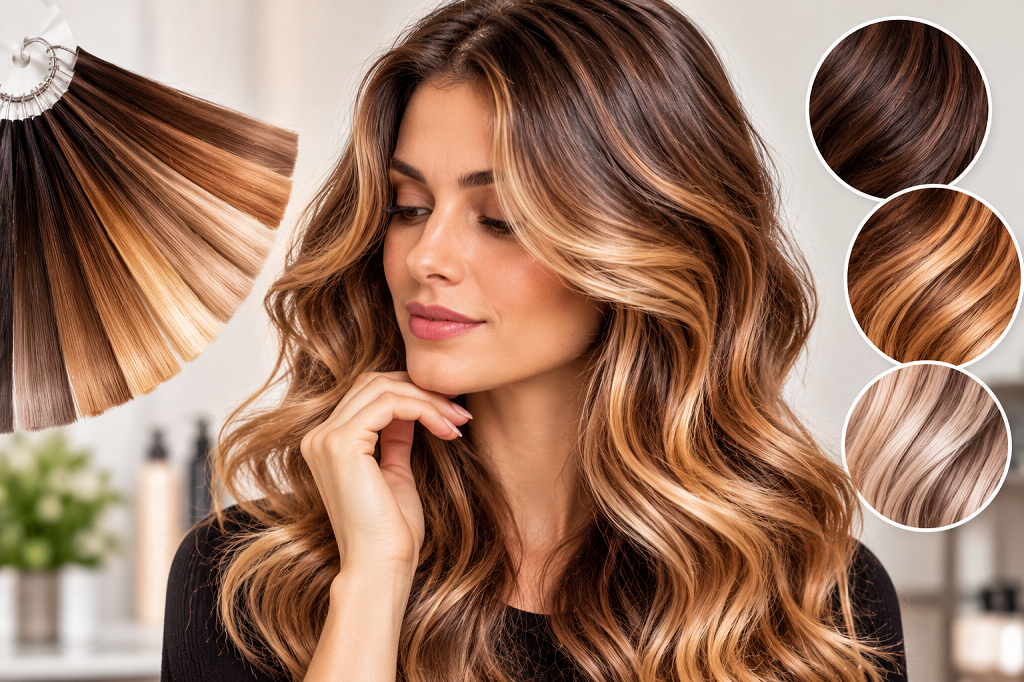
Hair colour is often discussed in terms of shades: blonde, brunette, copper, red or black. Yet the most interesting results rarely come from choosing a colour category alone. What makes hair colour feel natural, sophisticated or distinctive is the relationship between tone, depth and dimension. These elements work together to create a result that complements the individual rather than simply changing the appearance of the hair.
Tone describes the underlying character of a colour. It may be warm, cool or neutral, with subtle variations that influence how the shade is perceived. A blonde can appear golden, creamy, beige or almost icy. Brown can have chocolate, ash, caramel or chestnut qualities. Even colours that appear similar at first glance can create very different effects depending on their undertones.
Depth refers to how light or dark a colour appears. This is not simply a question of choosing between blonde and brunette. Two people with brown hair may have noticeably different levels of depth, with one appearing soft and light while the other has a much richer, darker finish. Choosing the appropriate depth helps maintain balance between the hair, complexion and overall appearance.
Dimension introduces variation within the colour itself. Rather than creating one uniform shade from root to end, dimension allows different tones and levels of lightness to work together. This can be achieved through carefully placed highlights, lowlights, subtle tonal adjustments or a combination of techniques.
The result is often more interesting because it interacts with light. Hair with dimension can appear to change slightly as it moves or as the lighting around it changes. Some areas catch the light more strongly, while others create depth and contrast. This gives the hair a sense of movement even when the cut itself is relatively simple.
Understanding these principles is central to professional colour work. A stylist does not simply select a shade from a chart and apply it. They consider the starting colour, the condition of the hair, previous colour treatments and the desired result. They also think about how the colour will work with the haircut and how it may change as the hair grows.
One of the most common misconceptions about hair colour is that a lighter result is always more noticeable or flattering. In reality, the most successful colour may involve very subtle changes. A slightly warmer brunette, a softer blonde around the face or a few carefully positioned lighter pieces can create a significant difference without making the hair look dramatically different.
The placement of colour is particularly important. Highlights concentrated around the face can brighten the overall appearance, while a more distributed approach may create a softer, sunlit effect. Lowlights can restore depth where the hair has become too uniform or excessively light. Root shading can help blend different tones and create a more gradual transition between natural growth and coloured lengths.
The condition of the hair must also remain part of the conversation. Colouring involves chemical processes, and the approach should take account of the hair’s existing strength and history. Previously lightened hair, for instance, may respond differently from hair that has never been coloured. An experienced colourist can explain what is achievable, whether the desired result is realistic in one appointment and what compromises may be necessary to protect the hair.
This is one reason why a thorough consultation matters. Clients often arrive with a photograph of a colour they admire, but the image may have been created under specific lighting or on hair with a very different natural starting point. A skilled colourist looks beyond the photograph to understand the qualities that appeal to the client.
Perhaps the attraction is the softness of the shade, the brightness around the face or the contrast between darker roots and lighter lengths. Identifying these details creates a more useful starting point than attempting to reproduce an image exactly.
For anyone considering a colour change, visiting a salon with experienced professional hair colourists in London can provide an opportunity to discuss these possibilities in detail. A considered approach should take account of personal preferences, natural colouring, hair condition and the amount of maintenance the client is comfortable with.
Maintenance is an important part of colour design. Some techniques are intended to create a noticeable contrast and may require more frequent appointments. Others are designed to grow out gradually, allowing the natural root to become part of the overall look. Neither approach is inherently better; the right choice depends on the desired finish and the client’s routine.
Home care also contributes to how colour looks between appointments. Excessive heat, unsuitable cleansing products and frequent exposure to environmental stress can affect the appearance of coloured hair. Using appropriate haircare and limiting unnecessary heat styling can help preserve the condition and appearance of the lengths.
Colour trends will continue to introduce new names and combinations, but the underlying principles remain remarkably consistent. Tone creates character, depth establishes balance and dimension brings movement. When these elements are considered together, hair colour becomes less about following a trend and more about creating a result that feels natural, thoughtful and individual.
The most beautiful colour is not always the most complicated. Sometimes its success lies in the way different shades work quietly together, creating an effect that feels effortless even when considerable technical skill has gone into achieving it.
