
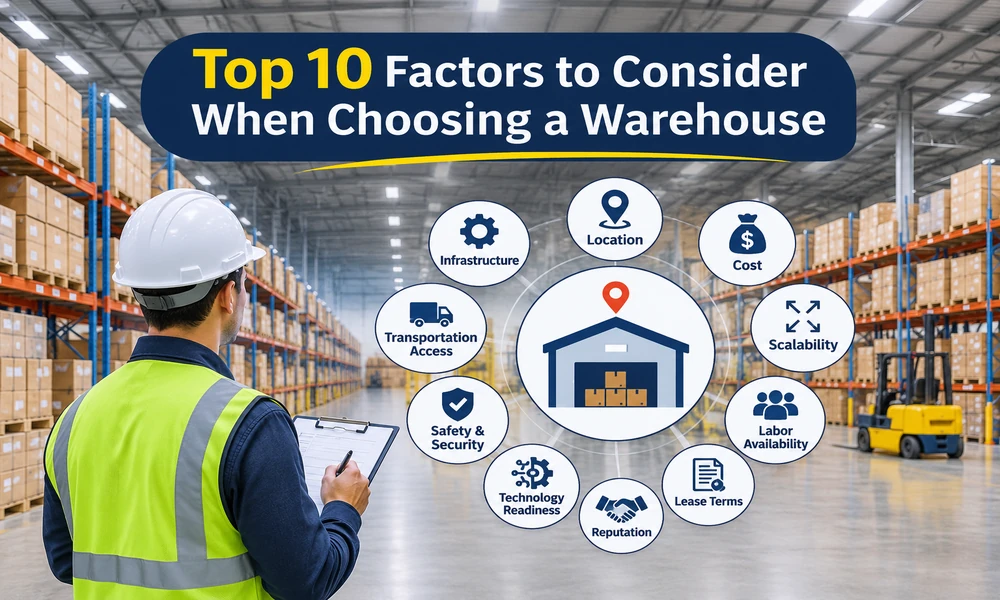
Choosing the right warehouse is an important decision for businesses looking to manage inventory, streamline distribution, and improve supply chain operations. With changing business requirements and growing customer expectations, investing in modern warehousing solutions can help companies maintain efficiency and reduce operational challenges. However, not every warehouse offers the same facilities, accessibility, or flexibility. Businesses need to evaluate several factors before selecting a warehouse that aligns with their storage requirements, distribution goals, and long-term growth plans.
10 Important Factors to Consider When Choosing a Warehouse
1. Location and Connectivity
Location is one of the most important factors when selecting a warehouse. A strategically located facility can reduce transportation time, lower logistics costs, and improve delivery efficiency. Businesses should look for warehouses with convenient access to highways, industrial corridors, railway networks, and major consumption centres.
Good connectivity also makes it easier to coordinate the movement of goods between suppliers, manufacturers, distributors, and customers. Locations near important logistics routes can offer a significant operational advantage.
2. Storage Capacity and Space Availability
Before choosing a warehouse, businesses should assess their current inventory requirements and future storage needs. The facility should have sufficient space to accommodate different product categories without creating congestion or restricting movement.
Consider the following aspects:
- Total storage area and available floor space
- Ceiling height and vertical storage capacity
- Loading and unloading areas
- Space for inventory sorting and packaging
- Scope for future expansion
Selecting a warehouse with scalable capacity helps businesses manage seasonal demand and increasing inventory volumes.
3. Infrastructure and Construction Quality
The quality of warehouse infrastructure directly affects inventory safety and operational efficiency. Businesses should evaluate the building’s construction, flooring, ventilation, drainage, lighting, and overall maintenance.
Grade A warehouses are particularly relevant for businesses that require organised layouts, modern infrastructure, and efficient material handling. Features such as high-quality flooring, adequate loading bays, fire safety systems, and sufficient clear height can support smooth warehouse operations.
4. Transportation and Logistics Facilities
A warehouse should support the efficient movement of goods across different transportation networks. Easy access to highways, railways, and other freight infrastructure can simplify distribution and reduce transit delays.
Businesses operating across multiple regions may also consider multimodal logistics parks, which integrate different transportation modes within a connected logistics ecosystem. Such facilities can improve cargo movement and support more efficient supply chain planning.
5. Technology and Warehouse Management Systems
Technology plays an increasingly important role in modern warehouse operations. Automated processes and digital inventory management tools help businesses maintain accurate stock records, reduce manual errors, and improve order fulfilment.
Look for facilities that can accommodate technologies such as:
- Warehouse Management Systems (WMS)
- Barcode and RFID-based tracking
- Automated inventory monitoring
- Real-time stock visibility
- Digital order processing systems
These technologies can improve inventory control and provide better visibility into day-to-day warehouse activities.
6. Safety and Security Measures
Protecting inventory, employees, and equipment should be a priority when selecting a warehouse. A reliable facility must have appropriate safety arrangements to minimise operational risks and prevent unauthorised access.
Important safety features include CCTV surveillance, access control systems, fire detection equipment, sprinklers, emergency exits, and trained security personnel. Businesses dealing with sensitive or high-value products should also check whether the facility meets their specific storage and handling requirements.
7. Operational Flexibility and Scalability
Business requirements can change due to market demand, seasonal fluctuations, and expansion into new regions. Therefore, selecting a warehouse that offers operational flexibility is essential.
Flexible warehousing solutions allow businesses to adjust storage capacity and operational arrangements according to changing requirements. Companies should consider whether a facility can accommodate higher inventory volumes, additional handling requirements, or changes in distribution patterns without major disruptions.
8. Total Cost and Rental Considerations
Warehouse selection should involve more than comparing monthly rental prices. Businesses need to calculate the overall cost of operating from a particular facility.
Some important expenses to evaluate include:
- Monthly rent or lease charges
- Maintenance and facility management fees
- Transportation and distribution expenses
- Labour and equipment costs
- Utilities and security charges
A warehouse with a slightly higher rental cost may still offer better value if its location, infrastructure, and operational facilities reduce overall logistics expenses.
9. Workforce Availability and Labour Access
An accessible workforce is important for maintaining smooth warehouse operations. Businesses should evaluate the availability of trained workers, supervisors, equipment operators, and logistics personnel near the selected location.
Warehouses situated close to established industrial areas and employment centres may provide better access to the required workforce. Labour availability can also influence operational continuity, productivity, and long-term management costs.
10. Location-Specific Market Potential
The warehouse location should align with the business’s distribution strategy and target markets. Companies should examine regional consumption patterns, manufacturing clusters, industrial development, and emerging trade routes before making a decision.
For example, logistics developments around Indore and Pithampur are attracting attention due to their industrial connectivity and potential to support regional distribution. Developments such as Fourmativ’s FOURWRD logistics park reflect the growing importance of strategically positioned logistics infrastructure in emerging industrial regions.
Why Choosing the Right Warehouse Matters
The right warehouse can influence several aspects of business performance, from inventory management to customer satisfaction. A strategically selected facility helps businesses reduce unnecessary transportation costs, maintain better stock visibility, and improve order processing.
Additionally, well-planned supply chain infrastructure supports smoother coordination between manufacturing, storage, and distribution activities. As businesses expand into new markets, having access to suitable warehousing facilities becomes increasingly important for maintaining operational consistency.
Conclusion
Choosing a warehouse requires careful evaluation of location, infrastructure, storage capacity, connectivity, technology, safety, and overall operating costs. Businesses should look beyond immediate storage requirements and consider how a facility will support their future growth. By prioritising the right factors and investing in modern warehousing solutions, companies can build more efficient logistics operations, improve distribution capabilities, and establish a stronger foundation for long-term business growth.
