

Meditation does not require an empty mind, a perfect posture, or a quiet hour. It requires a willingness to notice what is happening and return attention to a chosen anchor. That return may happen once or fifty times. Each one belongs to the practice.
Beginners often wait until life feels calm enough to start. A better approach is to begin inside ordinary conditions with a short, repeatable method. Op e n offers guided meditation alongside breathwork, movement, music, and sound, enabling entry into mindful awareness through multiple doorways.
Step 1: Choose a Realistic Time and Place
Select a moment that already has a clear cue: after waking, before the first email, after lunch, or before bed. Start with two to five minutes. The UCLA Health guide to beginning mindfulness notes that beginners can begin with only a minute or two and may practice while sitting, standing, or lying down.
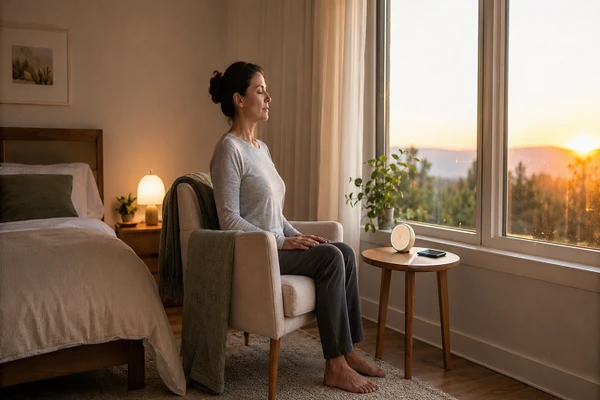
Choose a place that is safe and reasonably free from interruption. A chair is enough. A cushion, bench, or folded blanket may help, but equipment is optional.
Step 2: Find Alert Comfort
Sit with the spine naturally upright rather than rigid. Let the hands rest and soften the shoulders. Keep the eyes gently closed or lower the gaze. If sitting causes pain, use a supported position that allows wakefulness.

Take one unforced breath and notice the contact points beneath the body. There is nothing special to manufacture. The first task is to arrive.
Step 3: Select One Anchor
The breath is common because it is always present. Notice air at the nostrils, movement in the chest, or expansion around the abdomen. Do not control your breath unless the session specifically instructs you to use a breathing technique.
If breath awareness feels uncomfortable, choose sound, the hands, or the feet as the anchor. Op e n’s guide to how to meditate help beginners explore guided practices and learn how focused, nonjudgmental attention fits into a broader mindfulness routine.
Step 4: Work with Distraction
The mind will wander. When that becomes clear, silently note “thinking,” “planning,” or “remembering.” Then return to the anchor without criticism. Distraction is not an interruption of meditation; noticing it is one of meditation’s central actions.
Strong emotion may also arise. Open the eyes, feel the feet, and reconnect with the room. Stop if the experience becomes overwhelming. Meditation can support wellbeing, but it is not a replacement for professional mental-health care.
The National Center for Complementary and Integrative Health reviews evidence on meditation and mindfulness while emphasizing that findings vary across conditions and study quality. Beginners should approach promised outcomes with care and treat practice as a skill rather than a cure.

Step 5: Close the Session Deliberately
When the timer or guidance ends, do not rush to the next screen. Notice the body and the mood without demanding a change. Take one fuller breath, open the eyes, and choose the next action.
A simple closing question can help: “What is present now?” The answer may be calm, restless, fatigued, or with no obvious difference. All are valid observations.
Step 6: Make Consistency Easier
Set a minimum that survives busy days. Two minutes keeps the habit alive. Longer sessions remain optional. Pair the practice with the same cue and leave the seat ready.
Guidance can reduce uncertainty, especially in the first weeks. Repeat one short session until the structure feels familiar. Add variety later. If a day is missed, restart at the next cue without trying to compensate.
Keep expectations plain. Progress may look like noticing distraction sooner, responding less harshly to restlessness, or remembering to pause during the day. These changes can be subtle and uneven. A meditation log can contain only the date and duration; it should support the habit, not become a scorecard.
Common Beginner Questions
How long before meditation feels natural?
There is no fixed timeline. Familiarity grows through repetition, even when individual sessions feel restless.
Is background music acceptable?
Yes, if it supports attention rather than becoming another distraction. Guided music or sound can be a useful entry point.
Can meditation be practiced lying down?
Yes. A supported lying position may be appropriate, although it can make sleep more likely.
Begin with the Next Two Minutes
The foundation is uncomplicated: choose a place, notice an anchor, return when attention wanders, and repeat. Explore Op e n’s guided meditation library, select one beginner-friendly session, and let a small daily pause grow through use rather than ambition.
