
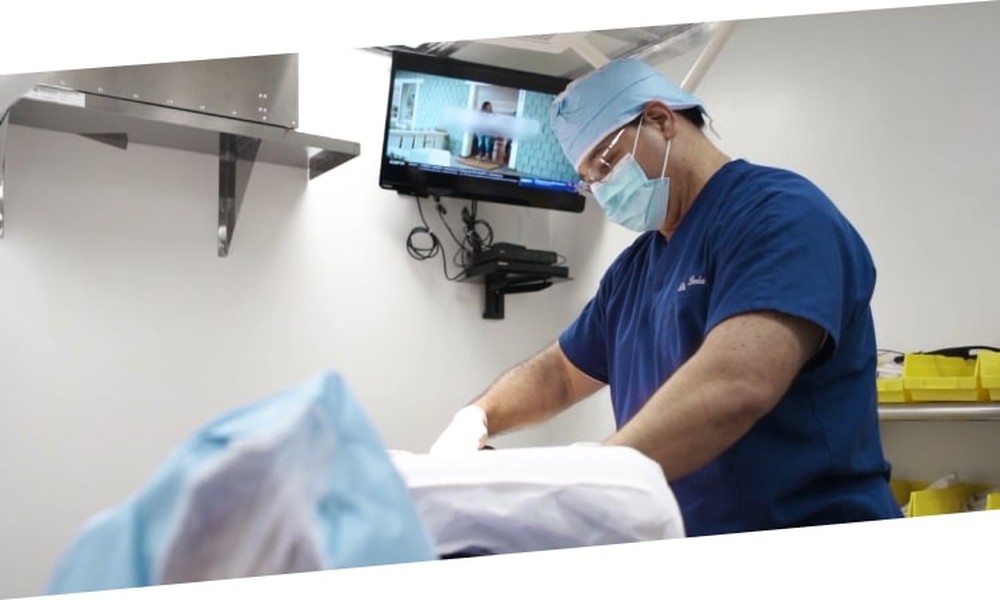
Adult circumcision is more common than most people assume, and the men seeking it are doing so for a wider range of reasons than the conversation typically acknowledges. At Lazare Urology in Brooklyn, adult circumcision is performed in a certified in-office operating room under sedation – not local anesthesia only – which makes the procedure experience significantly different from what most men expect based on what they’ve heard or read. The purpose of this post is straightforward: to give men in New York who are considering circumcision an accurate picture of why men choose it, what the procedure actually involves, and what recovery and long-term function look like.
Why Adult Men Seek Circumcision
The medical reasons are the ones physicians most readily discuss, and they’re worth understanding clearly.
Phimosis is the most common medical indication. It describes a condition in which the foreskin is too tight to retract normally over the glans, either fully or partially. Phimosis can be present from birth or develop over time, and it ranges in severity from mild (some difficulty retracting, particularly during erection) to complete (the foreskin cannot be retracted at all). Severe phimosis causes pain during intercourse, increases the risk of infections and balanitis, and can make hygiene difficult. When topical steroid treatment – often the first-line approach for phimosis – fails to resolve the condition adequately, circumcision is the definitive treatment.
Recurrent balanitis and balanoposthitis – infections affecting the glans or the foreskin – are another medical indication. Some men experience these repeatedly despite appropriate hygiene and treatment, and circumcision eliminates the anatomical environment that allows them to recur.
Paraphimosis, in which a retracted foreskin becomes trapped and cannot be returned to its normal position, is an acute condition that sometimes occurs in men with underlying phimosis. It requires prompt management, and circumcision typically follows to prevent recurrence.
Beyond medical indications, a significant number of adult men seek circumcision for personal or aesthetic reasons. Some are uncircumcised men who have simply preferred the circumcised appearance throughout their adult lives. Some are pursuing circumcision because of a new relationship, partner preference, or cultural or religious considerations that weren’t acted on at birth. Some are motivated by a combination of minor symptomatic issues – intermittent discomfort, hygiene concerns, recurring minor irritation – that individually might not rise to the level of formal medical indication but that together make circumcision the logical choice.
These are all legitimate reasons, and a urologist’s role is not to judge the hierarchy of motivation but to evaluate whether the procedure is appropriate and to perform it safely and well.
The In-Office Procedure Under Sedation at Lazare Urology
The most meaningful difference between circumcision at Lazare Urology and circumcision at a general urology office or hospital outpatient setting is sedation. At most practices, adult circumcision is performed under local anesthesia only. This means injections into the penis to anesthetize the area before the procedure begins – an experience that is anxiety-producing for most men and uncomfortable for many.
At Lazare Urology, the procedure is performed in the in-office operating room with a board-certified anesthesiologist administering IV sedation. The patient is sedated before any local anesthetic injections are given. The local anesthetic is still administered – it provides analgesia for the post-operative period as the sedation wears off – but the patient is unaware of it. The experience of being awake and alert during penile injections and the procedure itself is eliminated.
For most men who have been putting off scheduling because they’re apprehensive about what the procedure will feel like, this matters. The sedation approach converts what many men imagine as an acutely uncomfortable experience into one from which they wake up with the procedure already done.
The circumcision itself involves removing the foreskin using a surgical technique that creates a clean, aesthetically appropriate result. In an adult with mature anatomy, the procedure takes approximately 30-45 minutes and uses sutures to close the incision. Most men leave the office within an hour or two of arrival.
What Recovery Actually Looks Like
Recovery from adult circumcision is longer than newborn circumcision because adult anatomy is more vascularized and more complex. Most men should plan for one to two weeks of meaningful activity modification.
The first few days bring the most discomfort – swelling, bruising, and sensitivity in the surgical area. The swelling after circumcision can be pronounced and sometimes alarming to men who aren’t warned to expect it. It is normal. Supportive underwear, ice during the first 24-48 hours, and elevation when resting help manage both swelling and discomfort. Pain in the first days is typically manageable with over-the-counter analgesics, though prescription options can be provided.
Most men return to desk work within three to five days. Physical activity and exercise should be avoided for two to three weeks. Sexual activity typically resumes at four to six weeks, once healing is sufficient that friction and erection are comfortable and the incision is fully healed.
The absorbable sutures dissolve on their own, typically over two to four weeks, and do not require removal. The wound should be kept clean and dry per the post-operative instructions provided.
What to Expect Regarding Sensation and Function
This is the question that men most commonly research before scheduling, and it deserves a direct and honest answer based on the clinical literature and clinical experience.
Sexual function after adult circumcision is preserved. Erection, orgasm, and ejaculation are not affected by the procedure. The nerves responsible for erection are not involved in circumcision, and the mechanisms for orgasm and ejaculation are similarly unaffected.
The question of whether sensation changes after circumcision is more nuanced and honestly more contested. The foreskin contains sensory nerve endings, and removing it does change the sensory landscape of the penis somewhat. What men report subjectively varies. Some report no meaningful change. Some report increased sensitivity during the initial post-healing period (because the glans, which was previously covered, is now exposed to constant contact with clothing). Some report slightly altered sensation over time as the glans surface adapts to direct contact through a process of keratinization that occurs gradually after circumcision. Most men who choose adult circumcision for non-emergency reasons are satisfied with the outcome – including the sexual aspect – but having a realistic expectation that some sensory adaptation occurs is more useful than assurances that nothing will change.
Scheduling an Adult Circumcision Consultation at Lazare Urology
If you’re in New York and are considering adult circumcision – whether for a medical indication like phimosis, for recurrent infections, or for personal reasons – the consultation at Lazare Urology is where the clinical picture gets assessed and the questions get answered. Dr. Lazare evaluates each patient’s anatomy and specific situation to confirm the procedure is appropriate and to discuss what the specific result will look like.
Patients come to Lazare Urology from throughout Brooklyn, Manhattan, Queens, the Bronx, and the greater New York area. The in-office operating room and sedation approach mean the experience is as manageable as adult circumcision can be made. Contact the office to schedule a consultation.
